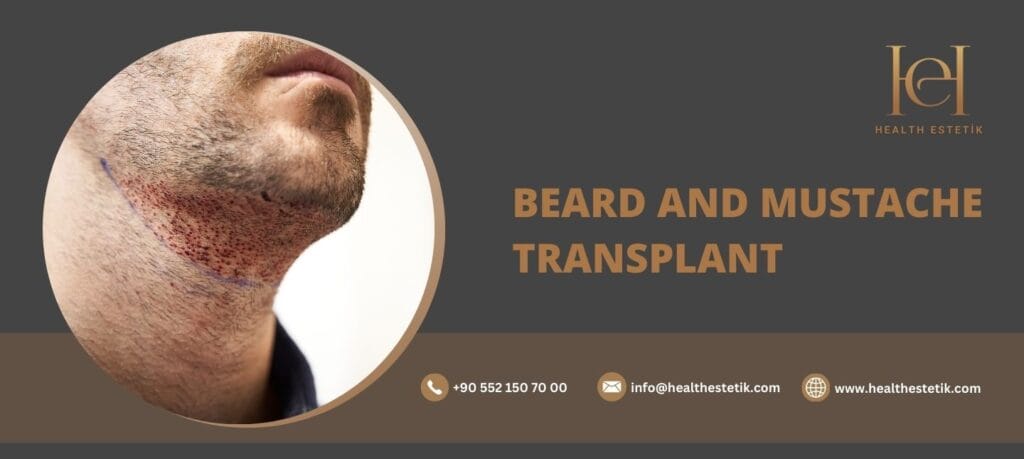
Beard and Mustache Transplant Beard and mustache transplants have become a popular trend in recent years. Although there are minor differences, the procedure is similar to a hair transplant with DHI. People prefer beard and mustache transplants due to many aesthetic reasons.
The main reason for the transplant is that beard and mustache hair strands are sparse. The problem is solvable by placing hair follicles in specific parts. If an experienced specialist performs your transplantation, it isn’t easy to distinguish the transplanted area from other regions.
Some people suffer from scars from hair breaks or surgeries, while others do not like the shape of their beards or mustache. Beard and mustache transplants are available for all types of requests.
Besides scars and burns that may occur due to various reasons, hormonal disorders and metabolic diseases may result in hair loss in the facial area. Before deciding on beard transplantation, you should investigate the cause of the beard or mustache loss. We recommend you wait until the 22 to have a hair transplant operation.
Usually, the back of the neck is the donor area for the beard and mustache transplant. In some cases, doctors may prefer using body hair for donor grafts. They use the DHI method for graft collection and plantation. Usually, around 3000 hair follicles give satisfactory results for beard transplant. At the same time, 400-800 roots are sufficient for a mustache transplant. A hygienic environment is crucial for a successful transplant. For this reason, all materials should be sterile.
Beard Transplant
Beard loss is genetic for some people, but for others, various conditions may cause this loss. Many factors affect the frequency and hair quality of the beard. However, hormonal causes are the leading ones. The lack of hormones that develop and intensify the hair follicle is usually due to the genetic structure.
Beard transplant by the FUE method is collecting sufficient hair follicles from the donor area and placing the roots into the channels in the target area following the natural angle. Although other facial areas can be donors, grafts from the nape are usually better for a successful transplant.
In cases where the beard is absent, planting 1000 to 3000 roots can be sufficient to achieve the desired appearance. However, doctors may plant more roots according to the patient’s desires. You will feel no pain as you will be under local anesthesia. Thanks to micro punches, there will be no scars after the beard transplant. Also, acne-sized cysts may form in the region due to placing the hair follicles deeper. These dermoid cysts are frequent complications and heal in time.
Beard Transplant Before and After
As part of the operation process, the period before and after the transplant is crucial for successful results. There are some precautions before the beard transplant and some advice you should follow after the operation.
Before Beard Transplant
Beard transplant is slightly different than hair transplant as the intensity of beards may vary from person to person. If there is a loss, doctors should consider the frequency of the beard and harmonize the new follicles with the surrounding hair. You will be under anesthesia during the procedure. There are three anesthesia techniques before the beard transplant.
Types of Anesthesia
- General Anesthesia: In general anesthesia, the most comprehensive type of anesthesia, the person is entirely unconscious and numb.
- Regional Anesthesia: In regional anesthesia, the person is not asleep. He is conscious, and his senses, like vision, hearing, taste, and smell, are functional.
- Local Anesthesia: In small surgical operations, nurses apply this with fragile needles to a specific location. The effect lasts between 15-20 min.
After Beard Transplant
After the beard transplant, you can return to your daily life as quickly as possible. You can wash your face 24-48 hours after the operation. Planted hair follicles appear in 2 to 3 days. There is an increase in the blood supply in the planting area, which causes acne-like small rednesses in the hair follicles for 2-3 days.
Due to the blood clotting out of the small holes, you may observe redness which can last for 4 to 6 hours, according to the number of roots. These slight rednesses that lead to better nutrition of the hair follicles will be disappeared within a week.
The hair follicles experience a shock loss approximately two weeks after the beard transplant. After this temporary shedding, the hair follicles grow entirely within 4-8 months, according to the person’s genetic structure.
Beard Transplant Cost
Like all aesthetic surgeries, the most frequent question for beard transplant is the cost of the procedure. It is impossible to say a fixed number like in other transplantation types Because we need to determine whether the person wants to grow a beard to treat hair loss or with aesthetic concerns. The number of grafts is usually the most critical determinant of beard transplant cost. The technique, the clinic’s location, and the doctor’s experience also affect the prices.
Beard Transplant Turkey
One of the most distinctive features of men is their beard, located on the face and along the jawline. The beard is an indication of a person’s age. Even some people see the beard as make-up for men. Therefore, it has critical aesthetic importance both globally and in Turkey.
Thanks to advanced and improved techniques in hair transplant, beard transplant operations became easy and successful in Turkey. There is an increasing demand for beard transplants, and more and more people call to ask for detailed information about the procedure.
In Turkey, we also have experienced and capable surgeons for beard transplants. On the other hand, Turkey offers the lowest prices for transplant operations compared to other countries. Therefore, people from different countries come to Turkey for a beard transplants.
Moustache Transplant
In men, the mustache is an aesthetic element that changes the expression of the face. Men complain about the lack of mustache for various reasons. Wounds, scars, and hormonal causes affect the mustache’s appearance. A hair transplant enables us to treat these deformations and significantly change the patient’s facial appearance. With the DHI technique, a painless and short-term procedure is possible.
The DHI method is the best option for performing a mustache transplant. In the sense of application, there is no difference between hair transplantation. What is essential in a mustache transplant is the successful postoperative appearance. Moustache hair grows close to the skin. Therefore the right angle is crucial to obtain a natural appearance. It is necessary to wait between 4 and 6 months for a complete result.
A Moustache transplant is a better option for those 20 years and older. This transplantation is very similar to hair transplantation. However, it is a much more sensitive procedure since it will take place in the face area. Meticulous work is essential to prevent possible scarring or undesirable complications.
The neck region is generally the best option for a donor site. However, if you do not have enough donor hair in the neck region, arm or leg hair can also be suitable for a mustache transplant. Depending on the sparseness mustache area, 300 and 500 hair follicles are sufficient.
Causes of Moustache Loss
Ringworm disease: The hairs on the lips are shed at specific intervals. Nowadays, treatment methods for ringworm disease are high.
Mustache sores: Deep sores in this area are likely to harm the hair follicles. Failure to treat deep wounds on time may damage the patient’s health and hair follicles in the mustache area.
Moustache habit: Some people do not notice, but there are various tics. Frequent repetition of these movements may damage the hair follicles over time.
Inflammation and Infections: Inflammation in the upper lip region causes future spillage in the relevant area. In addition, the high number of pimples may affect hair roots negatively. The hair follicles may disappear without treatment.
Psoriasis: Psoriasis is another disease that damages mustache and beard roots. In some cases, hair follicles on the lips get seriously hurt.
After Moustache Transplant
You leave the hospital with a bandage covering the operation area. You should change the dressing from time to time for three days. During this period, you should not wash your face; the recovery process after the transplant lasts about ten days. In this process, the hair roots are crusted. This crusting begins to disappear slowly with the first wash on the 3rd day. Then, you can feel the comfort and development of the roots in the transplant area.
You can shorten your mustache with scissors after 15 days. However, be careful when using scissors, as the follicles may not yet hold on to the skin. Shedding may occur 2-3 weeks after the operation. After 2 or 3 months, your new mustache grows again and continues to grow in the ordinary course. After six months of planting the mustache, the roots ultimately hold onto the skin. As a result, it continues to extend in the normal cycle.
Moustache Transplant Operation Day Tips
Following the doctor’s advice on the operation day before the transplant is essential because Following advice has a significant effect on the success of the transplant You can find a list of tips below for the operation day:
- Choose loose clothes that will not rub against your face on the day of the operation.
- Smoking is forbidden before a mustache transplant as it complicates the operation and healing process.
- Exaggerated requests and expectations may affect the course of the operation.
- You should eat light foods and go to the hospital as soon as you feel full.
- If you are on medication, you should inform your doctor before the operation.
- Alcohol hurts the results of the mustache transplant.
- If you already have a mustache, you should not cut it yourself. After the analysis on the operation day, if necessary, specialists shorten it in the hospital environment.
- It would help if you avoided caffeinated drinks before the operation.
When you take care of all these suggestions, your transplant process will be easy and effective.
Moustache Transplant Cost
Giving a specific price for the transplant is impossible as many factors affect the price point. Therefore, we recommend you reach us through Whatsapp for more information about the mustache transplant cost and the process. You can have a quick interview to eliminate the question marks in your head.
Moustache transplant planning by having an interview with your specialist will determine the exact cost of the operation. In this planning, you decide the number of hair grafts, the donor regions, and the transplant technique. These factors have great importance in determining the mustache transplant cost. Planting the hair healthily and comfortably is more important than the little price differences. Therefore, it is helpful to take advice from a reliable specialist.
On the other hand, the mustache transplant cost is at the same level as hair transplant prices. However, a detailed analysis will provide reliable information about the whole process. You should know that the vital aspect of a mustache transplant is the quality of the service.
Finding a reliable and experienced center with capable specialists affects the results of the transplant operation. Contact us to have a detailed plan of your process. We are glad to give you a quality service for a mustache transplant.
How can I make an appointment for a beard transplant consultation?
You can book your appointment with a clinic for a beard transplant with a simple click. The first contact will be over the phone, where the medical consultant will create a medical file for you to be diagnosed later with the doctor, and the process will take its flow.
Can I drink alcohol after a beard transplant?
It is not advisable to consume the alcoholic product for at least the first ten days, exceptionally since the doctor will prescribe medication for 1-week use to control the redness and the swallowing post-operational beard transplant.